Marketing

There are many elements that go into marketing, and many of them have to do with journalism. First off, one of the main aspects learned through journalism and marketing has to do with the importance of reading and research. Going off of that, it is important to be a critical thinker. With that being said you should always be reading. An example of being a critical thinker would be saving webpages to your bookmarks can be an effective way to brainstorm and generate ideas for marketing content. Journalistic skills and best-practices are also critical for creating any sort of customer-facing communication. Interview skills aren’t just useful for journalism; they are even as useful for creating content in the world of marketing. However, reading is only part of being successful in marketing through journalism. Writing is all about monitoring social media for new headlines and reactions and then going off of those  to create editorial and marketing content, all in the hopes of chasing an existing audience or trend. When it comes to journalism or marketing, it is important to do your own research. Ultimately, the kind of content that creates true value for your audience is the kind that matches searcher intent and drives traffic.
That leads me to the topic of Social Media Marketing

Social media marketing refers to the process of gaining traffic or attention through social media sites. Different social media platforms all are used to provide information in different ways. For example, Twitter is a social site designed to let people share short messages or “updates” with others. Facebook, in contrast is a full-blown social networking site that allows for sharing updates, photos, joining events and a variety of other activities.

social media marketing is becoming more popular than e-marketing and digital marketing together. Most social media platforms have built-in data analytics tools, which enable companies to track the progress, success, and engagement of ad campaigns. There are two main  platforms used for this. Social networking websites allow individuals, businesses and other organizations to interact with one another and build relationships and communities online. When companies join these social channels, consumers can interact with them directly. These interactions hit on a personal level. Social networking sites act as word of mouth or more precisely, e-word of mouth. The Internet’s ability to reach billions across the globe has given online word of mouth a powerful voice and far reach. Social networking websites are based on building virtual communities that allow consumers to express their needs, wants and values, online. Social media marketing then connects these consumers and audiences to businesses that share the same needs, wants, and values. Everyone now days is always glued to their phone. Mobile phone usage is beneficial for social media marketing because mobile phones have social networking capabilities, allowing individuals immediate web browsing and access to social networking sites. For example, Many companies are now putting QR (Quick Response) codes along with products for individuals to access the company website or online services with their smart phones.

Social media marketing is something that can only benefit your food business. It is a source of instant feedback and a market research tool. It helps you bond with customers and potential customers. The main way to get the word out about your business is to simply start posting. Instagram and YouTube, in particular, are great for pictures and videos because their users love to “share” them with friends. With that being said, just creating an Instagram page for your business can help you gain customers.

https://www.instagram.com/p/BnDVbVMnjos/?utm_source=ig_web_button_share_sheet

Example of restaurant Instagram page.


Mobile Journalism (MOJO)

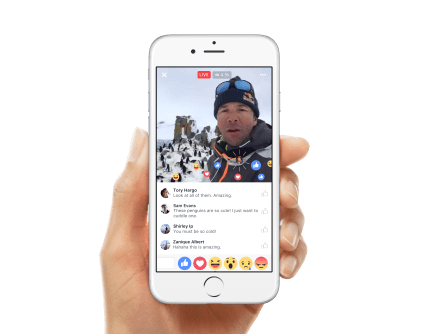
This week in class we talked about Mobile Journalism otherwise known as MOJO. There are many trends within MOJO that we should be aware of. The first is how high the demand for video is. This is because everyone now days is glued to their phones. People are now staying up to date on news via phone rather than watching it on TV. Another trend is the growth of social media. If your audience is on social media, they you too need to be on social media in order to stay interacted with them. Having quick and easy access to stream and post video content through your mobile device is a huge plus of MOJO. With that being said, it is easy to create content on the same platform that it is being viewed. Before today, the way we would stream media was through TV, radio, and books. Now days, content is multi-media and the key ingredient is your smartphone. Your smartphone can take pictures, record audio and video as well as editing graphics. These are all examples of mixed media content all through one device being your smartphone. Another trend is live streaming. Live stream is a trend that you are able to do within multiple different social media platforms, like Facebook live.

A facebook live video streaming from an iPhone.

Even major broadcasters are using livestream from their mobile phones.

One of the first live broadcasts through a phone.

Overall, mobile journalism is cost-effective, powerful, and in tune with the trends. When it comes to cooking, mobile journalism an easy way to help others when it comes to cooking. For example, all over YouTube there are cooking videos that allow others to learn different recipes by simply watching a video.

Example of a YouTube cooking video

Watching a video is a much easier way to learn how to cook rather than reading the recipe out of a cook book.

Citizen Journalism

This week in class we discussed citizen journalism. This is a very controversial term which many people don’t agree with. It refers to the reporting of news events by members of the public using the Internet to spread the information. It is easily spread through personal websites, blogs, microblogs, social media and so on.

Heres an awesome video that better explains citizen journalism.

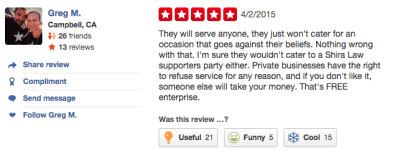
An example of citizen journalism would be the use of food blogs. An article states that 79% of respondents consulted U.S. food blogs at least daily, if not multiple times a day, crediting their increased usage to a food bloggers candid writing style, diverse voice and range of topics, as well as their approachable personalities. Websites like yelp, trip advisor, and even google all review restaurants. Citizen journalism is used throughout these food critic websites because of how peopler posting their opinions on the restaurants, rather than it being actual credible facts. So why do we trust these websites?


Example of a Yelp review


Guest Speaker Post

This week in class, we had the pleasure of having Alberto Linares come and speak to our class about Augmented Reality and Virtual Reality, and his experience working with them. One of the main things that Alberto is passionate about is music, and specializes in drums and guitar. He has had the opportunity to work with many famous musicians for example he mentioned that he got to work on a project for a band called Mumford and Sons. Since Albert spoke about how he has used AR within the music industry, I wanted to focus on how AR can change the music industry completely.  Harris study says that 78% percent of millennials would rather put money into experiences and events over a desirable object, and another 72% say they want to increase the amount they put towards experiences over physical objects in the coming year. Audiences are already familiarized with the technology, and the most popular, mainstream examples of AR would be Pokemon Go and Snapchat. The first way AR can change the music industry is through Music Videos. AR can empower musicians to bring the video to their audience and even make the listener part of the video.

Looking as far back as 2010, Rihanna and David Guetta partnered with Doritos to create an AR experience for the video to their track “Who’s That Chick.”

Another way AR made its way into the music industry would be through Music Marketing. As Inc. notes, AR can bridge the human and virtual worlds. While technologically impressive, virtual can be hard for audiences to connect with. For example, one restaurant in New York City increased business by 75% through a strategic use of Pokemon Go.  Next we can look at AR within Music Education. AR is a tool for the music industry to meaningfully and emotionally connect with younger audiences. AR has already made its way into the music industry if we look at the example of a Japanese company has already produced a hologram that can teach people to play the piano. Lastly one of the most important ways AR has changed the music industry in my opinion is the overall music experience. The possibilities for altering physical experiences like concerts and events with AR are limitless. For example, song identifying app Shazam just launched the world’s first scaled augmented reality solution for brands. AR has the potential to bring the concert to fans in their own environments. Augmented reality has the potential to become the new reality for the music industry.


Digital Tools for Journalists

This week in class, we discussed digital tools for journalists. These tools are coming from Google, social media, social networks and more. When searching for places to eat, everyone turns to Google. Google then can lead you to different sites like Yelp, TripAdvisor, even Google maps. Google grammar is something we can use to search better in order to better our search results. For example, word exclusion can be used when trying to find something specific. For example, if you are searching coffee shop but want to find coffee, you would exclude the word shop. Looking at literal search, you would just type in the exact thing you are trying to find, for example if you are trying to find a specific restaurant, you would type in something like “Brunch & Cake”. In my experience I normally use literal searching when using Google.

When it comes to using social media, there are many technical concepts that can help when searching. For example, a tag is a label attached to someone or something for the purpose of identification or to give other information. When using tags, it is ESSENTIAL to use them properly, or else it will not work. Tags can be used on many social media sites, making it easier to find things you are looking for. For example, when posting an Instagram, in the caption you can add different tags that have to do with your picture. If I posted a picture of the food I was eating I could use tags like where I was eating, what type of food it was, the kind of taste it has, etc. Another thing that can help when searching is search engine optimization (SEO), and search engine marketing (SEM).

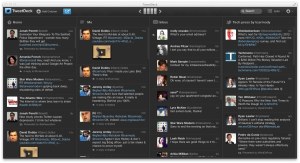
Lastly, digital tools are used within social networks. When using twitter, you are able to use something called TweetDeck. TweetDeck is a social media dashboard application for management of Twitter accounts.

This way, you can manage all of your favorite twitter accounts. For example, you can add all your favorite restaurants to your TweetDeck to see new specials and announcements all in one place. Apart from these tools, there are many other useful tools that can be used when searching the web.


Virtual Reality/Augmented Reality Post

This week in class, we talked about virtual and augmented reality. Before this class I knew what virtual reality was, but never really had a clear idea of what augmented reality was. Both virtual and augmented reality are being used to impact the future of the food industry. Virtual reality (VR) is a simulated real-world environment, augmented reality (AR) remains in the real world and uses a variety of hardware devices and extensions to give users a layered or multidimensional view of an object.

The main areas that are affected by VR and AR in the food industry are designed to reduce the costs of training and to enhance the customer experience. When looking at reducing the cost of training, Simulating the training with VR creates an excellent simulated but noticeably unrealistic environment. When using this type of training the chefs can then visualize the process and the details looking at a single screen, requiring only one video to instruct any number of chefs. When using VR and AR on the marketing end for the food industry, in order to get customers to come to your restaurant, it requires creating a visual experience using VR and AR that is memorable and motivational to the consumer. Here are two examples of Coca Cola using VR and AR in their marketing campaigns.

We can see that VR is an experience, AR is an immersive experience and more interactive for the customer. AR has extended itself into connecting the physical world with the virtual world. This shows us a whole new world for marketing speaking in terms with connecting with the customer. In this example, companies are making video games available to customers on their cereal boxes.

Today and moving forward, technology is going to be enhancing our overall experience as a customer. For example, tequila manufacturer Patron has already taken this bold step. The company recently launched a 360-degree video showing the entire tequila manufacturing process, from harvesting the agave plant to bottling the drink. Sure, pictures and videos are fine when it comes to choosing where you want to eat, but AR is so much better.


Practice post

Add text (You can copy any text from anywhere)

Multimedia TEST in Blog

* Adding a single image

* Add a hyperlink in your text https://moodle.ceaclassroom.com/course/view.php?id=772

* Adding a gallery + Adding a slideshow

This slideshow requires JavaScript.

* Adding a video from Youtube (2 ways) 

* Adding an audio from Soundcloud

* Adding a tweet

* Adding an instagram

Adding a visualization: